Dubrovnik, the Jewel in Croatia’s Crown:
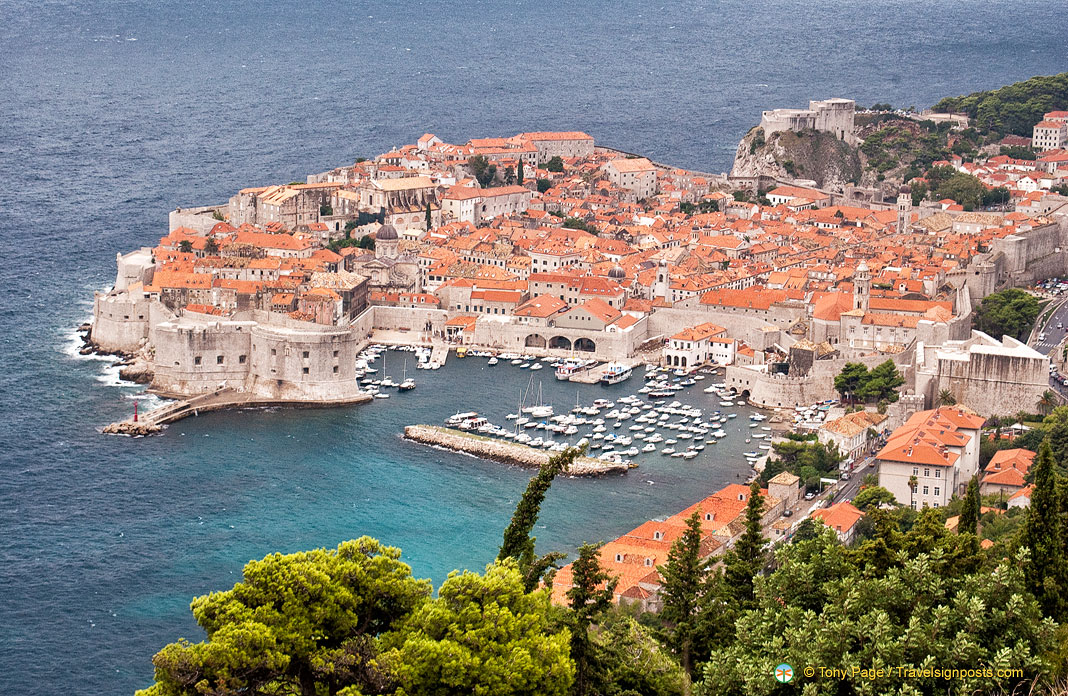
Aerial view of Dubrovnik’s Old Town, Croatia
The remarkably well-preserved medieval walled city of Dubrovnik enjoys accolades like the ‘Pearl of the Adriatic’ and ‘Jewel in Croatia’s Crown’. As they say – a picture paints a thousand words – and it’s easy to see from the above image why Dubrovnik is a popular holiday destination for independent travellers, coach tours as well as cruise ships.
Visiting Dubrovnik
Dubrovnik is situated on the Dalmatian coast and the Old Town (Stari Grad) is what most tourists come to see. There are two main gates – Pile and Ploce, and entry to the old fortified city centre is via the Pile Gate on the western side. To reach the Gate, we walked across a small stone bridge which was once a crossing over a moat. Above the arch of the gate is a small statue of St. Blaise, the patron saint of Dubrovnik, whose statue you’ll see in many places about town. Once you enter the gate of the Old City, all the beautiful monuments and treasures of Dubrovnik Old Town are conveniently contained within the magnificent city wall.
Pile Gate takes us onto the Stradun (also known as Placa), the main street which crosses the Old Town from west to east. This central stone street was built in 1667 after the great earthquake destroyed the city. We had arrived in Dubrovnik early in the morning and the Stradun was nice and peaceful. Many of the shops were still shut, and a few were just struggling to open. But the peace and quiet didn’t last for long. By 11 am hoards of tourists were already pouring into the Old Town, many of whom were probably from the cruise ships that we saw on our way in. Dubrovnik gets very hectic during the summer cruising season and we’re here experiencing it.
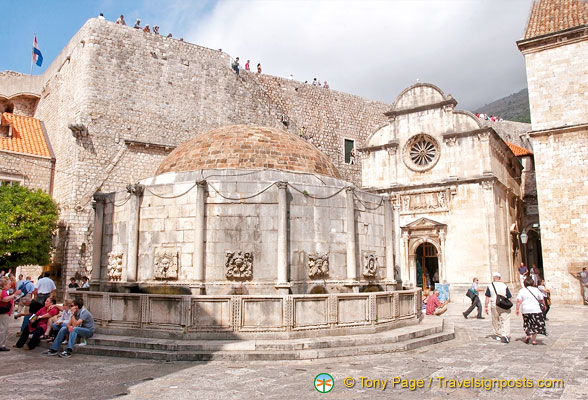
Big Fountain of Onofrio, Dubrovnik
What to See in Dubrovnik
Along the Stradun and up to the harbour are many of the main Dubrovnik attractions such as the Big Fountain of Onofrio, Franciscan Monastery, Orlando’s Column and Sponza Plaza. There are so many things to see in Dubrovnik, and as we only have two days in Dubrovnik, we had to crank up our pace and not be distracted by the shops, a weakness of mine, although I did managed to squeeze in some time to buy a ring.
By mid-afternoon we thought that we’d earned a coffee break so we stopped at the Gradskavana Cafe, an old-world Viennese style coffee house, just off the Stradun. Just as we were relaxing into our cup of coffee and a nice Viennese-type pastry, drums, trumpets and a lot of noise broke out in the square. A local ceremony had just begun in the front of the town hall and young men dressed in colourful costumes were performing some kind of watch guards parade. We were lucky to have seen this parade as it added some rich colour to our photos.
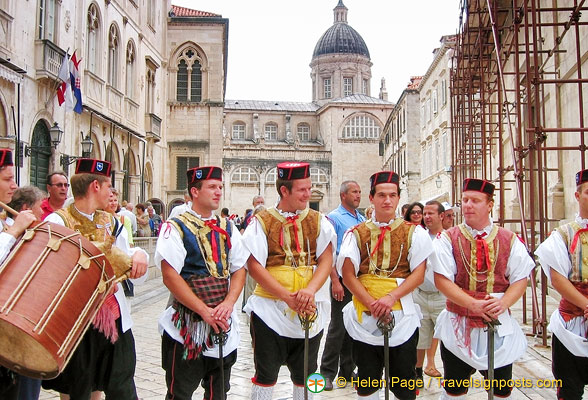
Dubrovnik Town Ceremony
Finding your way around Dubrovnik is easy as the streets are laid out in a grid. There are many side streets to explore at ground level and there is also another layer of Dubrovnik to explore on the upper levels. If you only have limited time here, it’s worthwhile doing a Walking Tour of the Old Town and getting an insider’s view of this historical city.
By the end of Day 1 we had already seen a lot of this beautiful city and loved the feel of the place. You can see our Dubrovnik photos Here.
What to Do in Dubrovnik
One of the main things to do in Dubrovnik is to walk the Old City Wall, which we left to Day 2 of our visit. It takes time to walk from the entrance to the exit and during the peak tourist season it is very busy up there.
From Dubrovnik, it’s also possible to do a day trip to Montenegro, visit the island of Korcula, or visit one of the charming villages for a taste of some Dalmatian produce.
For the complete list of Tours from Dubrovnik, see Here.
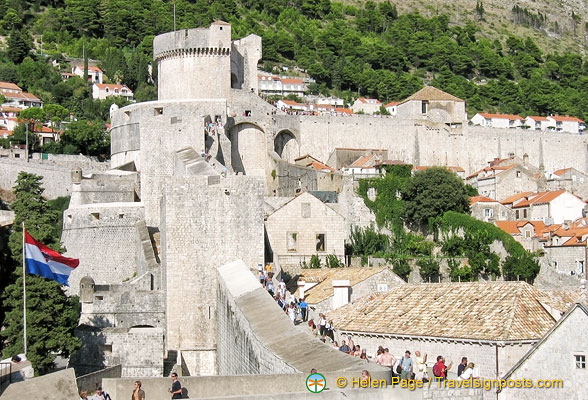
Dubrovnik City Walls
Where to Eat
There is no problem finding places to eat in Dubrovnik. During our exploration of the city, we saw many cafes and restaurants about. Due to its coastal location, there’s plenty of seafood on offer in Dubrovnik and along the upper level of the town there are more seafood restaurants. Pressed for time, we had a pizza and tomato salad at one of the cafes in a side street and were pleasantly surprised at the quality of the pizza. The tomatoes were absolutely delicious and some of the best I’ve tasted. Needless to say, we came back for more the next day.
Hotels in Dubrovnik
Dubrovnik gets very busy during the peak summer season and it can be difficult to get affordable accommodation close to the centre during this season, unless you book in advance.
For a central hotel in the Old Town, it’s hard to beat the Baroque Pucic Palace. This 18th-century hotel is right next to the limestone-paved Stradun.
Due to the limited land in the Old Town you won’t find flashy high-rise hotels here, but if you are after an apartment, there are many nice ones around. You can check out the complete list of Dubrovnik hotels Here.


 Take Better Digital Photos eBook
 Guerrilla Travel Photography eBook
Leave a Reply